28 May, 2026

· 0 comments
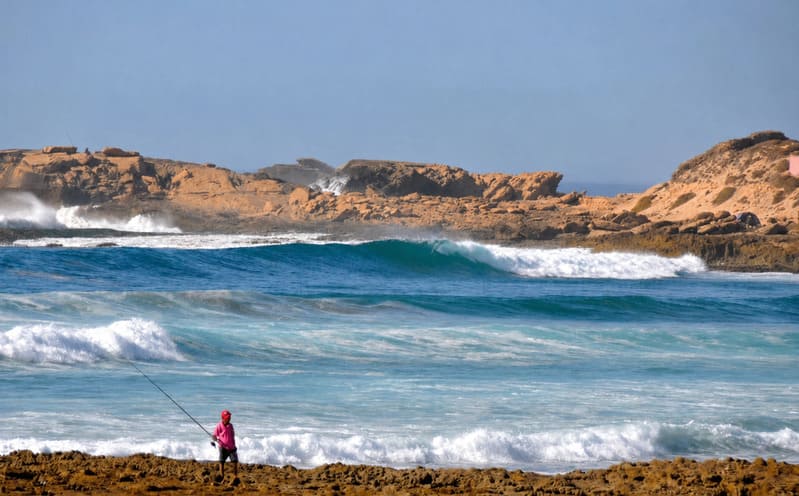
Taghazout is one of Morocco’s best-known surfing destinations. This small village on the Atlantic coast and the surrounding towns offer sandy beaches, rocky breaks and some of the country’s most renowned right-hand point breaks.
Its reputation is closely linked to Anchor Point, but surfing in Taghazout goes far beyond this famous wave. The area also has suitable spots for beginners, options for intermediate surfers and technical breaks reserved for experienced riders.
However, it is not enough to arrive, rent a board and paddle out at the most famous spot. The size and direction of the swell, wave period, wind, tides and type of seabed can completely transform the conditions of a surf session.
From our experience teaching at our surf school in the Canary Islands, we know that a wave’s reputation does not determine whether it is suitable for a particular person. A spot considered easy can become demanding when the waves increase in size or when there are stronger currents or winds. Meanwhile, a normally crowded beach may provide excellent learning conditions on a calm day.
In this guide, we explore the best surf spots in Taghazout and the surrounding area, the best time to visit, the most appropriate locations for each ability level and the main safety factors to consider before entering the water.
Taghazout is located on Morocco’s Atlantic coast, north of Agadir. For decades, it was primarily known as a fishing village, but the arrival of international travellers and surfers gradually transformed the area.
Today, surfing is an important part of its identity and economy. Taghazout and nearby towns, particularly Tamraght and Aourir, have a high concentration of surfer-friendly accommodation, rental shops, local guides and transport services to different breaks.
One of the area’s main advantages is its variety. Along a relatively short stretch of coastline, surfers can find beach breaks, reef breaks and point breaks with very different characteristics.
This diversity makes it possible to choose alternatives according to:
The surfer’s ability level.
The size of the swell.
The direction of the swell.
The state of the tide.
The direction of the wind.
How crowded each spot is.
Although tourism development has considerably changed Taghazout, the village retains part of its traditional structure. Its narrow streets, proximity to the sea and the constant presence of surfboards create an atmosphere that is very different from that of a large coastal city.
The combination of local life and surfing culture is one of its greatest attractions. However, the increase in visitors has also brought more traffic, tourism pressure and overcrowding at certain breaks during the months with the most consistent waves.
For this reason, it is advisable to travel with a respectful attitude. Surfing is not an activity isolated from its surroundings. It is an important part of everyday life and the local economy for many people in the area.
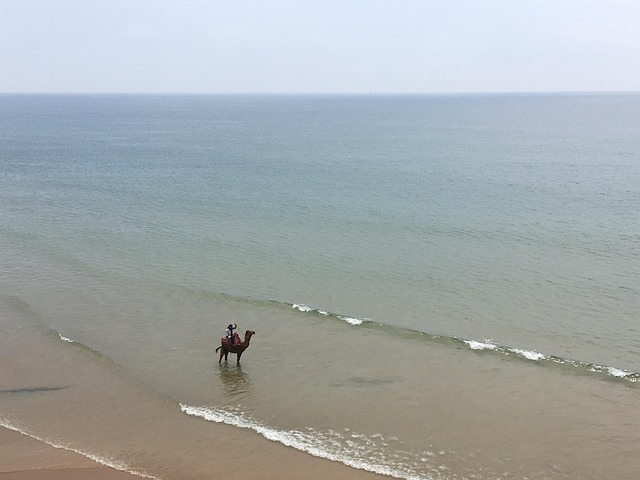
Taghazout is particularly famous for its right-hand waves. Several of its best-known spots break along rocky points and seabeds, offering long rides when the swell direction, wind and tide align correctly.
There are also sandy-bottomed beaches commonly used for beginner lessons and progression. These areas may reduce some of the risks associated with rocky seabeds, but they do not eliminate the possibility of currents, collisions with surfboards or conditions that are too powerful.
The three main types of break are:
Point break: the wave breaks progressively along a point or headland.
Beach break: the wave breaks over a sandy seabed that may change with tides and storms.
Reef break: the wave breaks over rock or reef and usually requires more experience.
Each type of wave requires a different approach to positioning, paddling, taking off and leaving the water.
The best time to surf in Taghazout depends on your ability level and the type of waves you are looking for. There is no single perfect season for every surfer.
Autumn and winter usually provide more consistent swell from the North Atlantic. These conditions activate the area’s best-known point breaks and reef breaks, but they also increase the power and difficulty of many waves.
During spring and summer, waves are generally smaller. Even so, conditions may be more suitable for beginners, particularly on sheltered beaches and when surfing under supervision.
The period between autumn and winter is the most popular among intermediate and advanced surfers.
During these months, there is a greater chance of finding:
More consistent swells.
Working point breaks.
Long right-hand waves.
Fast sections.
More power at exposed spots.
Currents, access difficulty and the number of surfers at the best-known waves also increase.
A winter day is not automatically better. A powerful swell can make spots that are normally manageable far too demanding for certain ability levels.
During spring and summer, waves are usually smaller and less consistent. Advanced surfers may have fewer opportunities to surf the major point breaks, but people learning to surf may find more accessible conditions.
Open beaches continue to receive swell, so a less powerful season does not mean a complete absence of waves.
At any time of year, it is important to check the forecast and observe the sea before paddling out. The actual conditions are more important than any general description of the season.
Swell height is important, but it is not the only factor that should be checked.
You should also consider:
The direction of the swell.
The wave period.
The orientation of the spot.
The direction and strength of the wind.
The state of the tide.
The depth of the seabed.
The presence of currents.
A small swell with a long period can produce waves with more energy than expected. Similarly, strong onshore winds can disrupt a session that initially appeared promising.
One idea repeatedly mentioned in the experiences of surfers who have taken lessons in Taghazout is that the best time to surf does not always match the time originally booked. Adjusting a session according to the tide, wind or condition of the waves can improve both safety and surfing quality.
When people talk about Taghazout surf spots, they normally include a stretch of coastline that extends beyond the village itself. Some breaks are located next to the town centre, while others are only a few minutes away by road in the Tamraght and Aourir areas.
This guide focuses exclusively on nearby surf spots that can easily be visited while using Taghazout as a base.
The ability-level classifications are only a general guide. The same spot may be accessible in small conditions and become highly technical when the swell increases. The final decision should always be based on the actual state of the sea.
Devil’s Rock is located in the Tamraght area and is one of the most popular beaches for learning to surf.
It has sandy-bottomed sections and may offer both left-hand and right-hand waves. Its difficulty changes according to the size of the swell, the wind and the formation of the sandbanks.
As it is a popular beach, it can attract many surf lessons and individual surfers. Beginners should maintain a safe distance from other boards and follow the instructions given by their instructors.
Banana Beach is situated near Aourir and Tamraght. It is commonly associated with beginner surfing because of its sandy seabed and the possibility of finding manageable waves on smaller days.
It should not be confused with Banana Point, which has a different type of break and a higher level of difficulty.
When the swell increases, Banana Beach can develop currents and sets powerful enough to exceed the ability of a beginner.
Crocodile Beach, also known as Crocs, is an open beach located near Tamraght that may be suitable for beginners and improving surfers.
As it is a beach break, the peaks change with the sandbanks. Before entering the water, it is advisable to observe where other surfers paddle out, where the sets break and in which direction the water is moving.
Panoramas is located beside Taghazout and is generally considered suitable for beginners or intermediate surfers when the waves are not too large.
Its proximity to the village makes it easy to access, although it can also result in a higher number of surfers.
Banana Point is located south of Taghazout, near Aourir, and can produce long, progressive right-hand waves when it receives the correct swell.
It is an interesting option for intermediate surfers who have good control over paddling, taking off and following the face of the wave. The seabed and access require more attention than at a sandy beach.
Hash Point is located directly in front of the centre of Taghazout and is one of the easiest spots to access from the village.
When it works, it produces a right-hand wave that can be enjoyable for intermediate surfers. It may be relatively manageable in smaller conditions, but the presence of rocks and the overall difficulty increase with a larger swell.
La Source is located north of Taghazout and is known for combining fast sections with more open faces.
It is generally suitable for confident intermediate and advanced surfers. The rocky seabed and changes in the tide make it important to understand the entry and exit points.
Mysteries is located close to Anchor Point and can produce powerful, high-quality waves.
Experience is required to interpret the peak correctly and position yourself in the appropriate area. In smaller conditions, it may be suitable for upper-intermediate surfers, but its difficulty increases quickly when a larger swell arrives.
Anchor Point is located immediately north of Taghazout and is the most famous wave in the area.
It is a right-hand point break capable of producing extremely long rides when it receives the correct swell size and direction.
Its reputation does not mean that it is suitable for everyone. The rocky seabed, currents, entry point, wave speed and number of surfers can make it a demanding session.
To surf Anchor Point safely, you need to have good control over:
Paddling.
Taking off.
Board control.
Reading the line-up.
Priority rules.
Entering and leaving the water over rocks.
Killer Point is located north of Anchor Point, within the area normally associated with surfing in Taghazout.
It is an advanced break exposed to powerful swells. It can provide long walls and fast sections, but entering and leaving the water requires experience.
This is a spot for surfers who are comfortable with larger waves, currents and rocky seabeds.
From our experience working with students in Famara, we know that describing a surf spot simply as easy or difficult can be misleading. The appropriate ability level also depends on the size of the waves, currents, wind and depth of the seabed.
| Spot | Area | Suggested level | Type of wave | Seabed | Main precaution |
|---|---|---|---|---|---|
| Devil’s Rock | Tamraght | Beginner and intermediate | Beach break | Sand and mixed sections | Currents and crowds |
| Banana Beach | Aourir/Tamraght | Beginner | Beach break | Sand | Can become more powerful |
| Crocodile Beach | Tamraght | Beginner and intermediate | Beach break | Sand | Changing sandbanks |
| Panoramas | Taghazout | Beginner and intermediate | Mixed break | Sand and rock | Crowds |
| Banana Point | Aourir | Intermediate | Right-hand point break | Rock | Entry and seabed |
| Hash Point | Taghazout | Intermediate | Right-hand wave | Rock | Variable wave quality |
| La Source | North of Taghazout | Intermediate and advanced | Reef break | Rock | Tide and depth |
| Mysteries | North of Taghazout | Intermediate and advanced | Rocky break | Rock | Positioning |
| Anchor Point | North of Taghazout | Advanced | Right-hand point break | Rock | Crowds, currents and access |
| Killer Point | North of Taghazout | Advanced | Point break | Rock | Demanding access |
These classifications are only a general guide. The required ability level can change considerably depending on the swell, period, wind and tide.
Taghazout can be a good destination for learning to surf, but this does not mean that all of its beaches are suitable for beginners.
The presence of sandy areas, surf schools and transport services makes it easier to get started. At the same time, the proximity of advanced breaks means that the surf spot must be selected carefully.
Sandy-bottomed beaches such as Devil’s Rock, Banana Beach and Crocodile Beach are commonly used for initial surf sessions.
However, a sandy seabed does not automatically make a beach safe. You must also consider:
The height of the waves.
The strength of the currents.
The direction of the wind.
The frequency of the sets.
The amount of available space.
The number of surfers in the water.
Beginners should look for small waves, enough white water to practise in and an area free of obstacles.
Anyone who has never surfed before should complete their first sessions under professional supervision.
An instructor can teach:
The correct position on the board.
Paddling technique.
The take-off movement.
Safety rules.
How to fall correctly.
Basic priority rules.
A local guide may also be useful for intermediate surfers who are unfamiliar with the coastline. Their value is not limited to finding good waves. They can also help surfers avoid spots that are unsuitable for their ability or for the conditions on a particular day.
Several positive factors are repeatedly mentioned in reviews from people who have learned to surf in Taghazout:
Step-by-step explanations.
Patience.
Clear technical advice.
Attention to safety.
Adaptation to the surfer’s level.
Appropriate choice of surf spot.
A relaxed and motivating atmosphere.
These factors are usually more important than simply choosing the cheapest option.
For a first surf session, it is advisable to look for:
Small, progressive waves.
Easy-to-catch white water.
A sandy seabed.
Weak currents.
Light winds.
Enough space.
Supervision in the water.
It is better to avoid days when the sets close out across the entire beach, when there is a strong current pulling out to sea or when the wind makes controlling the surfboard difficult.
Checking a forecast helps you plan a session, but the information must be interpreted according to the characteristics of each spot.
The same swell height can behave very differently at an open beach, a sheltered point break or a reef break.
Swell direction indicates where the waves are coming from. Spots with the best orientation receive more energy, while others may be partially sheltered.
The period measures the time between one wave and the next. A longer period normally indicates that the swell is carrying more energy.
For this reason, two days with the same swell height can produce completely different conditions.
Offshore wind blows from the land towards the sea. It can keep the face of the wave cleaner, although excessively strong offshore wind can also make paddling and taking off more difficult.
Onshore wind blows from the sea towards the land. It normally disrupts the surface and reduces the quality of the waves.
The first hours of the day may have lighter winds, but this is not a universal rule. The local forecast should be checked every day.
The tide changes the depth of the water and the way a wave breaks.
On rocky seabeds, an excessively low tide can leave dangerous sections exposed. At other spots, high tide may cause the wave to lose its shape or stop breaking properly.
There is no single perfect tide for the entire coastline. Every break works differently.
Currents can make it easier to paddle out at certain point breaks, but they can also pull a person towards dangerous areas.
Before entering the water, observe:
Where other surfers enter.
Where the main set breaks.
In which direction the water is moving.
Where the rocks are located.
Which area is used to leave the water.
Whether there is an entry channel.
From our experience at a surf school, we recommend looking beyond wave height. The period, swell direction, wind, tide and currents can completely transform a surf session.
Safety should take priority over every sporting objective. Missing a wave is only a minor inconvenience. Entering a spot that clearly exceeds your ability can have much more serious consequences.
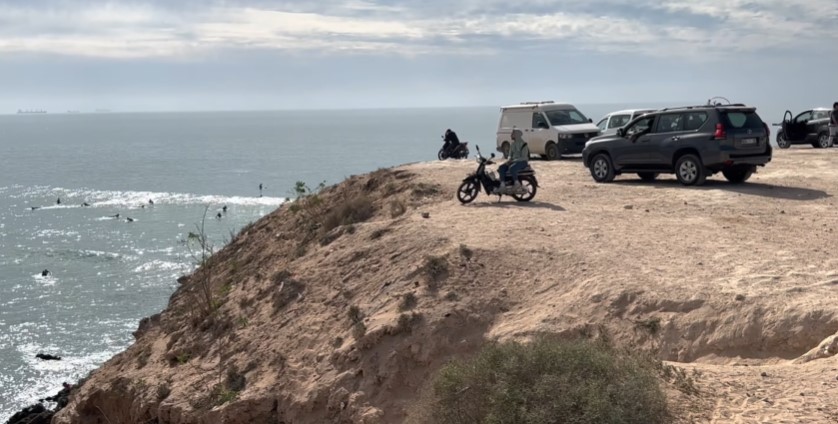
Sandy seabeds are normally associated with beginner surfing, but they can also produce strong currents and powerful closeouts.
Rocky and reef seabeds require greater control. It is important to know the depth, avoid landing on your feet when you fall and stay out of the water when low tide leaves the seabed too close to the surface.
The main rules are:
The surfer closest to the peak has priority.
Do not paddle for a wave that another surfer is already riding.
When paddling back out, avoid crossing another surfer’s path.
Do not release your board when other people are nearby.
Wait for your turn.
Do not paddle for every wave in a set.
A crowded line-up requires more attention, not less.
The best-known spots can become crowded during the main swell season. Anchor Point is the clearest example, but it is not the only one.
It is advisable to enter the water with humility, observe how the peak works and avoid aggressive behaviour.
Respect should also continue outside the water:
Do not leave rubbish behind.
Take care of access routes and beaches.
Respect residential areas.
Support local businesses.
Avoid entering private property.
Maintain a polite attitude.
You should consider abandoning the session when:
The waves clearly exceed your ability.
You do not know the entry or exit point.
There are strong currents.
The seabed is too exposed.
The spot is excessively crowded.
You cannot identify the peak.
You are tired or injured.
The surfboard or leash is damaged.
Nobody in your group knows the area.
The smartest decision may be to find another beach or wait for the tide to change.
The planning will depend on your ability level, the length of the trip and how independently you want to travel.
Anyone visiting the area for the first time may benefit from staying close to rental services, transport options and beaches suited to their ability.
Agadir is the main arrival point for many travellers.
From the city or the airport, you can continue to Taghazout by taxi, private transfer, transport arranged through your accommodation or rental car.
Journey times may vary depending on traffic and the point of departure. It is advisable to agree on the conditions and price before beginning the journey.
Taghazout allows visitors to enjoy the atmosphere of the village and walk to certain areas.
Tamraght offers a different experience, with easy access to several beaches used for beginner surfing and a wide range of accommodation aimed at surfers.
The choice will depend on the type of trip:
Taghazout: atmosphere, restaurants and proximity to the main village.
Tamraght: closer to beginner beaches and generally more residential surroundings.
A car is not essential, but it gives you more freedom when choosing a surf spot.
Without your own vehicle, you can use taxis, organised transfers or transport provided by accommodation providers and surf schools.
In the reviews analysed, collection from the accommodation was repeatedly described as an advantage because it allowed surfers to travel to the break offering the best conditions that day.
Before renting equipment, check:
The general condition of the board.
Its size and volume.
The fins.
The leash.
The seams and zip of the wetsuit.
The return conditions.
Liability for damage.
The board should be selected according to your ability and the conditions. A board that is too small can make a session difficult when a larger, more stable and higher-volume board would have been more productive.
A short break allows you to experience the atmosphere and surf for one or two days. However, staying for a week provides more flexibility to adapt to changes in swell, wind and tide.
The reviews provided show that a single lesson can be enjoyable and useful, although several people admitted that they would have needed more days to practise and consolidate the corrections they received.
For progression, repetition and rest are just as important as the first explanation.
Travellers with more time may also consider visiting other Moroccan surfing destinations, such as Imsouane. However, it is considerably farther away and is not part of the immediate Taghazout area, so it should be treated as a separate stage of the trip.
Before entering the water, check the following:
I have reviewed the surf forecast.
I know the direction and period of the swell.
I have checked the wind forecast.
I have checked the tide table.
I have observed the spot from the shore.
I know where to enter and leave the water.
I know what type of seabed the spot has.
The conditions are suitable for my ability.
My surfboard and leash are in good condition.
I understand the priority rules.
I will not enter an unfamiliar spot alone.
I have insurance that covers surfing.

28 May, 2026
27 May, 2024
16 May, 2024
Comments
Leave a comment
Your e-mail address will not be published. Required fields are marked with *.