14 July, 2026

· 0 comments
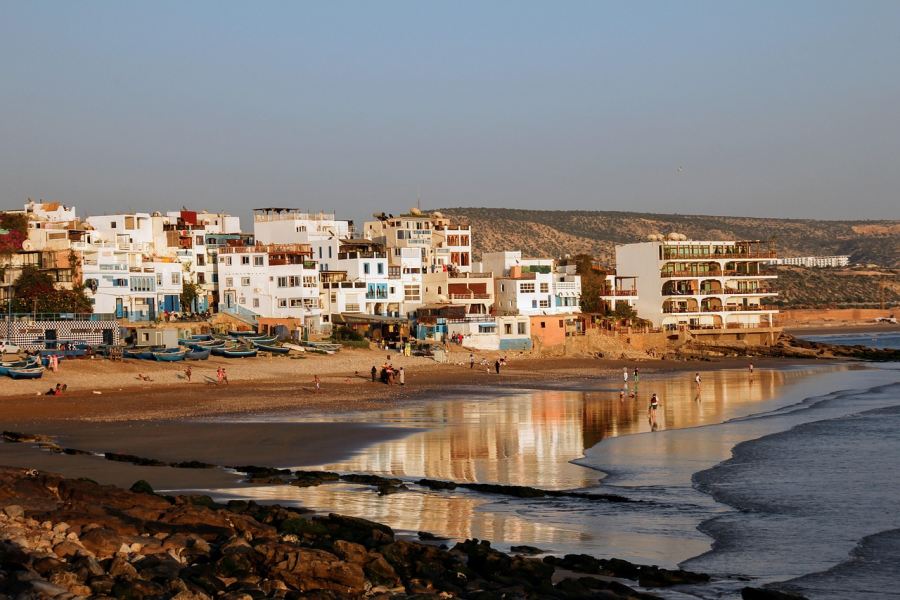
Morocco is one of those destinations that sooner or later comes to mind when you start thinking about a surf trip. It is close to Europe, has an Atlantic coastline with well-known waves, coastal towns with a strong surf atmosphere, and iconic areas such as Taghazout, Tamraght, Imsouane, Essaouira and Sidi Kaouki.
When someone searches for Morocco surf, they are usually not just looking for a list of beaches. They want to know where to surf in Morocco, which area to choose, when the best time to go is, whether booking a surf camp in Morocco is worth it, or whether they can organise the trip on their own.
On a first surf trip to the country, what you notice most is not only the quality of the waves, but how important it is to choose the right base area. Staying near Taghazout is not the same as moving around Imsouane, Essaouira or quieter areas further south.
This guide is designed to help you plan a surf trip to Morocco with more clarity: best areas, recommended spots, beginner tips, season, accommodation, equipment and practical advice so you do not arrive completely blind.
Surfing in Morocco combines quality waves, pleasant weather, local culture, accommodation designed for surfers and a coastline with options for different levels. That is why it has become a regular destination for those looking for a Morocco surf trip, whether with lessons, in a surf camp or independently.
Most of the best-known areas are located on the Atlantic coast, especially between Agadir, Taghazout, Tamraght, Imsouane, Essaouira and Sidi Kaouki. Along this stretch you will find some of the most popular surf spots in Morocco, with long right-handers, more accessible beach breaks and more technical points for experienced surfers.
The destination also has a sense of adventure that hooks you in. There are coastal villages, road trips, tagines after a session, mornings with the board ready and surf days that depend a lot on reading the conditions properly. That is exactly why it is worth preparing the trip well.
A surf trip along the Moroccan coast can be very different depending on how you organise it. You can stay in a surf house in Morocco, book a camp, rent a car and move around independently, or choose a more organised experience with lessons, transport, food and equipment included.
If you are looking for comfort, a Morocco surf camp can make sense, especially if it is your first time in the area. If you already have experience, understand conditions well and want to explore several spots, travelling independently will give you more flexibility.
This destination can work for beginners, intermediate surfers and advanced surfers, but not everyone should go to the same spots. This is one of the most important points.
For beginners, it is best to choose areas with surf schools, more controlled beaches and softer waves. For intermediate surfers, the coastline can be excellent for progression. For advanced surfers, there are powerful spots, rocky bottoms and long right-handers that require more ocean awareness.
There is no single answer to where to surf in Morocco. It depends on your level, the time of year, the type of trip you want and whether you are looking for lessons, atmosphere, long waves, peace and quiet or more demanding spots.
When planning a Morocco surf trip, it is worth not thinking only about famous spots. Sometimes the best session depends more on the tide, the wind and your level than on the name of the beach. Anchor Point may sound amazing, but that does not mean it is the best option for someone who is learning.
Taghazout is probably the best-known area for surfing in Morocco. For years it has been a reference point for European surfers looking for good waves, an international atmosphere and access to several famous spots.
Close to Taghazout is Tamraght, a very interesting area if you are looking for a slightly quieter base, with accommodation, surf schools, surf camps and good access to nearby beaches. For a first trip, both towns are usually comfortable options because they bring together services, surf atmosphere and a variety of spots.
Here you can find more accessible beaches for progression, but also more technical points. That is why, even though the area is popular, it is important to choose each session carefully.
Imsouane has its own name on the country’s surf map. Its best-known spot, The Bay, is famous for its long waves and for that feeling of being able to glide for a long time on the same wave.
For many intermediate surfers, Imsouane is one of the most attractive areas on the coast. It is not always the most convenient place if you want to move around a lot, but it can be a great choice if you are looking for a quieter experience, long days and a very recognisable wave.
If you are looking for a Morocco surf guide that goes beyond Taghazout, Imsouane should be on the list.
Essaouira has a different character. It is a city with more life, more tourism and a strong traveller atmosphere. It is also known for the wind, so it can combine surfing with other disciplines such as kitesurfing or windsurfing.
Near Essaouira is Sidi Kaouki, a quieter area with a wilder feel. It can be interesting for those looking for less crowding and a different experience from the Taghazout-Tamraght route.
If someone is wondering where to surf in Morocco and wants something less typical, Essaouira and Sidi Kaouki are two names worth considering.
Not every spot is suitable for learning. Some waves require experience, ocean knowledge and respect. Safi, Boilers and Anchor Point can offer powerful, high-quality waves, but they are not ideal options for beginners.
Here, factors such as rocky bottoms, wave power, currents, tides and the presence of high-level surfers all come into play. If you are not sure whether a spot is suitable for you, it is better to ask a local surf school, a guide or surfers who know the area well.
Rather than creating an endless list of names, the most practical approach is to understand what each area offers. That way, you can choose better and avoid the classic mistake of trying to see everything in just a few days.
| Area or spot | Recommended level | What to expect |
|---|---|---|
| Taghazout | Intermediate and advanced, with nearby options for learning | Surf atmosphere, surf camps, several famous spots and a good travel base. |
| Tamraght | Beginner and intermediate | A good area to stay, take lessons and move to nearby beaches. |
| Imsouane | Beginner with guidance and intermediate | Long waves, a calm atmosphere and a good option for progression. |
| Essaouira | Beginner and intermediate | A city with a traveller atmosphere, wind and wide beaches. |
| Sidi Kaouki | Intermediate | A quieter, less urban area with a freer feeling. |
| Anchor Point | Advanced | Iconic spot, long right-handers and demanding conditions. |
| Banana Beach | Beginner and intermediate | One of the best-known options for progressing surfers. |
| Boilers | Advanced | Technical wave, more delicate bottom and need for experience. |
| Killer Point | Advanced | Powerful spot, not recommended for starting out. |
If you are looking for beaches in Morocco for surfing, do not focus only on the most famous names. Always ask about the day’s conditions, size, wind, tide and recommended level. The same beach can be friendly one day and much more serious the next.
Surfing in Morocco for beginners can be a very good experience, but you need to choose well. The common mistake is thinking that every surf destination works for every level. It does not.
If you are just starting out, this country can be a great destination, but not every spot is suitable for beginners. There are friendlier beaches and other points where the bottom, current or wave size require much more experience.
For learning, the best option is to look for areas with surf schools, wide beaches, easy access and waves that are not too powerful. Tamraght, some beaches near Taghazout, Essaouira or certain days in Imsouane can work well if you are accompanied by professionals.
A surf camp in Morocco can be a good option if you want lessons, equipment, transfers and accommodation in the same package. It can also help you avoid the classic problem of arriving at a beautiful beach, seeing perfect waves and realising they are not suitable for your level.
If you have little experience, it is best to avoid spots with rocky bottoms, complicated entries, strong currents or a lot of pressure in the line-up. Anchor Point, Boilers or Safi should not be your first choice if you are still working on your pop-up, paddling or basic wave reading.
Morocco has waves to enjoy, but it also asks for humility. Your board does not understand ego. The ocean understands it even less.
If it is your first trip, the most sensible thing is to take lessons or at least let a local school guide you. Knowing where to enter, where to get out, which tide works best and which board to use can completely change the experience.
It is also important not to try to progress too quickly. When learning, a smaller, cleaner and more repeatable wave often teaches you more than a famous wave where you barely manage to ride a wall.
The best time to surf in Morocco depends a lot on your level. In general, autumn and winter are usually the most popular seasons for experienced surfers, while spring and summer can be more comfortable for those who prioritise an easier trip, lessons or progression without so much intensity.
The best season depends heavily on your level. The winter months can bring more consistent and powerful waves, but for learning or improving calmly, it is also worth looking at periods with more manageable conditions.
Winter is usually the most attractive season for intermediate and advanced surfers, because more swells arrive and there are more chances of finding quality waves. If you are looking for long right-handers, point breaks and more energetic sessions, this season often makes a lot of sense.
That said, more wave does not always mean a better trip for everyone. For beginners, a sea that is too powerful can limit the options quite a lot.
The search Morocco surf December makes sense because December falls within that more active Atlantic season. It can be a good month to find waves, especially if you already have experience or travel with someone who knows how to choose suitable spots.
For beginners, December can work, but it is best to go with a surf school, surf camp or guide. Not out of fear, but out of common sense. Choosing the right beach and timing can make the difference between a fun session and a free Atlantic washing machine.
Spring and summer can be good seasons for those looking for a calmer, less demanding trip with more manageable conditions. There may be less consistency, but also easier days for learning.
If your goal is to start surfing, improve your technique, enjoy the experience and combine surf with travel, do not rule out these seasons. If your goal is to chase powerful waves, you will probably look more towards autumn and winter.
A surf camp can be a very good option if you want to simplify the trip. It usually combines accommodation, lessons, equipment, transfers to surf spots and, in some cases, meals or complementary activities.
One of the most important decisions of the trip is whether to travel independently or stay in a surf camp. If you do not know the area, a surf camp or school can save you time, help you with equipment and take you to spots suited to your level.
A surf camp is usually more focused on lessons, groups and daily organisation. A surf house can be more flexible, with surfer-friendly accommodation and a shared atmosphere. Travelling independently gives you more freedom, but also requires more planning.
If you are searching for camp surf Morocco or Morocco surf camp, you are probably comparing options. The key is to check what each experience includes: lessons, number of students per instructor, group level, transport, equipment, location and flexibility.
For beginners, a surf camp can be especially useful. It saves you from having to decide every day where to go, which board to use or whether the conditions are suitable. It also allows you to progress with more continuity.
If you have little experience and want to make the most of the trip, it is better to invest in good lessons than to try to surf every famous beach without a clear plan.
Surf and yoga in Morocco is another common option. It can work well if you are looking for a more complete trip, with surfing in the morning, mobility, stretching and a more relaxed approach. It is not essential for everyone, but it can be interesting for those who want an active rest experience.
Organising a surf trip around Morocco is not complicated, but it is worth thinking through a few things before arriving. The coastline is long, the areas are not always close to each other and the conditions change.
Getting around by car gives you a lot of freedom, but it also changes the experience. Some spots are close to surf towns and others require better knowledge of the accesses, tides and road conditions.
For a first trip, I would not try to see everything. It is better to choose one area, surf there for several days and only move if the conditions justify it. In Morocco, rushing too much usually works against you.
Taghazout and Tamraght work very well as a base if you want surf atmosphere and variety. Imsouane is a good fit if you want something calmer and centred around a long wave. Essaouira can be a good option if you want to combine surf, city life and culture.
A rental car can be very useful if you want to move between spots, but it is not always essential. If you are staying in a surf camp with transport included, you may not need it. If you travel independently, a car will give you room to change beach depending on conditions.
That said, it is not all Google Maps and romantic adventure. Some access points may be less obvious, and arriving at a spot does not mean knowing where to enter the water.
If you are just starting out, renting equipment is usually enough. If you are intermediate or advanced and very particular about your board, you may prefer to bring your own.
In areas such as Taghazout, Tamraght or Essaouira, there are usually rental options. Even so, always check the condition of the equipment, the type of board available and whether the wetsuit is included.
On many trips, a 3/2 wetsuit may be enough, although this depends on the season, the area and how sensitive you are to cold. In cooler months, some people prefer a 4/3.
You do not need to turn your suitcase into a travelling surf shop, but it is worth packing the basics properly: swimsuit, rash vest, sunscreen, earplugs if you use them, a spare leash and something warm for after the session.
A local guide can be very useful if you want to make the most of the trip, especially if you only have a few days. It is not just about being taken to a beach, but about choosing the right spot for your level and for that day’s conditions.
Safety in Morocco, as in any surf destination, starts with not paddling out where you should not. Watch the ocean, ask questions, respect the line-up, do not paddle into peaks above your level and listen to people who know the area.
Before confirming the trip, it is worth reviewing these points:
| Point | Recommendation |
|---|---|
| Base area | Choose one main area and avoid trying to cover too many spots in a few days. |
| Level | Match the area to your real level, not to the most famous spot on Instagram. |
| Accommodation | Consider a surf camp, surf house or independent accommodation depending on your experience. |
| Transport | Decide whether you need a car or whether your accommodation includes transfers to the spots. |
| Equipment | Check whether you will bring your own board or rent one there. |
| Wetsuit | A 3/2 is often a good option, but consider a 4/3 if travelling in colder months. |
| Safety | Ask about tides, entries, exits, currents and the level of each spot. |
| Trip pace | It is better to surf one area well than to spend too much time driving just to tick off names. |
A good surf trip is not only about catching good waves. It also depends on organising your time well, choosing accommodation sensibly, not trying to cover half the coast in three days and understanding that Morocco is best enjoyed at a calmer pace.
Anchor Point, Imsouane or Taghazout sound great, but the name does not surf for you. The best spot is the one that matches your level and the real conditions of the day.
Before getting in the water, check the forecast, watch the sets, ask if you do not know the place and spend a few minutes understanding the entry and exit. That small pause can save you scares and frustrating sessions.
There is nothing wrong with choosing an easier wave. In fact, it is often the smartest thing to do if you want to improve. A session with many medium-sized waves teaches more than an hour trying to survive at a peak that is too demanding.
Morocco invites you to move around, but it is worth not turning the trip into a race between spots. Better to surf more and drive less. Your back, your board and your patience will thank you.
Morocco and Lanzarote are two very attractive destinations for a surf trip, but they offer different experiences.
Morocco has a more adventurous feel, with coastal villages, surf camps, long right-handers and a very different culture. Lanzarote, on the other hand, offers a European destination, comfort, stable weather, good connections and a powerful coastline for learning or improving, especially in areas such as Famara.
Morocco can be a great choice if you are looking for a trip with a sense of adventure, want to discover areas such as Taghazout or Imsouane and feel like enjoying a different cultural experience.
It can also work well if you already have some experience and want to explore several spots along the Atlantic coast.
Lanzarote can be a better option if you want to learn to surf with easier logistics, avoid currency changes, move around within a European environment and enjoy an island with waves almost all year round.
If your priority is to take a surf course, improve your technique and enjoy an organised experience, Lanzarote competes very well with Morocco.
To learn from scratch, more than the country itself, what matters is the school, the beach, the instructor and the conditions. Morocco can work very well if you choose the right surf camp. Lanzarote is also a very solid option if you are looking for lessons, safety and an easier experience to organise.
The question is not only where people surf in Morocco, but which destination will help you learn better depending on your level, the days you have available and the type of trip you want to experience.
The best time depends on your level. Autumn and winter usually offer more consistent and powerful waves, while spring and summer can be softer and more suitable for people who are learning or looking for a less demanding trip.
For beginners, it is best to look for areas with surf schools, accessible beaches and softer waves. Tamraght, some beaches near Taghazout, Essaouira or certain days in Imsouane can be good options if you go with lessons or a guide.
Some of the best-known spots are Anchor Point, The Bay in Imsouane, Banana Beach, Panoramas, Devil’s Rock, Boilers and Killer Point. Even so, the best spot will depend on your level and the conditions of the day.
Yes, especially if it is your first trip, if you are learning or if you do not want to worry about transport, equipment and choosing the right spots. A surf camp can help you make better use of your days and surf beaches that match your level.
Taghazout is more famous and has a stronger surf atmosphere. Tamraght can be more comfortable and quieter for accommodation. Imsouane stands out for its long waves and slower pace. The best option depends on whether you are looking for atmosphere, lessons, progression or peace and quiet.
Yes, December can be a good month for surfing in Morocco, especially for intermediate and advanced surfers. For beginners, it can also work, but it is advisable to go with a surf school or surf camp to choose the right conditions.
It is usually advisable to wear a wetsuit. A 3/2 may be enough in many situations, although in colder months some people prefer a 4/3.
It depends on the type of trip. If you travel independently and want to move between areas, renting a car will give you a lot of freedom. If you book a surf camp with transport to the spots, you may not need one.
14 July, 2026
27 May, 2024
16 May, 2024
Comments
Leave a comment
Your e-mail address will not be published. Required fields are marked with *.